Your Usual, Without Asking: The Gentle Magic of Becoming a Neighbourhood Regular

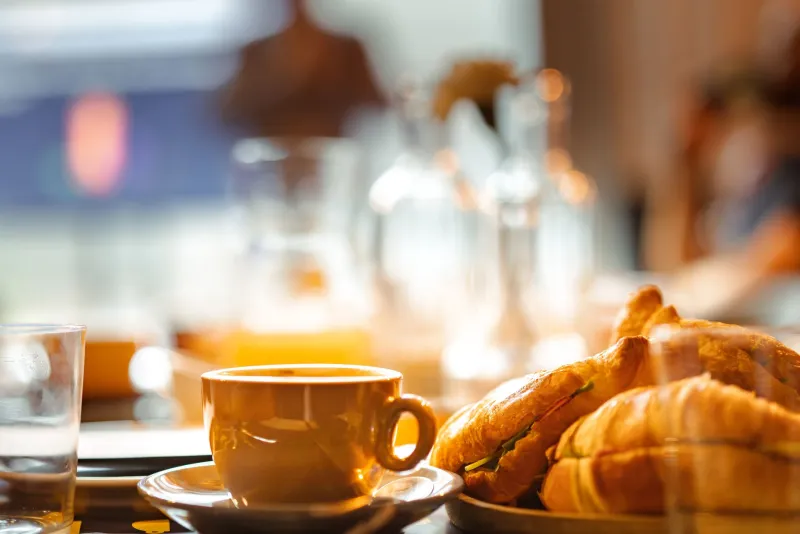
Photo: cosy UK neighbourhood brasserie table with coffee cup and server in background, warm daylight, via as2.ftcdn.net
The first time you walk into a neighbourhood brasserie, you are a table number. You are the 7.30 booking, the two-top by the window, the person asking whether the soup has cream in it. Nothing wrong with that. Anonymous eating out has its own pleasure: no expectations, no history, just a menu and an hour or two. But somewhere between the third visit and the tenth, something shifts. A server glances up and says, 'The usual?' and before you have even taken off your coat, the room feels a little less like a transaction and a little more like a place you belong.
That shift is the subject of this piece. Not loyalty cards, not VIP treatment, not the performative business of being 'a regular' with a capital R. Just the gentle, ordinary magic of a local brasserie learning your rhythms, and you learning its.
The first visit is supposed to be anonymous
A good brasserie should be welcoming to strangers. That is the whole point of all-day dining: you can slip in for a late lunch on your own, meet a friend for an early supper, or sit at the bar with a coffee and the paper while the room fills up around you. On a first visit, you want to be unknown. You want to read the menu without being rushed, ask what the pie of the day is, and decide whether this is your kind of place.
Regularity should never be forced. The best local relationships are not built by announcing that you intend to become a fixture. They are built by turning up, being decent, and letting the room get used to you. The first visit is an audition, but only in the loosest sense. You are not trying to impress anyone. You are simply checking whether the atmosphere fits.
Familiarity is not the same as fuss
When a brasserie knows your order, the experience changes in small, practical ways. You do not have to remember whether you take your coffee black or with milk. You do not have to explain that you prefer the corner table because it is quieter, or that you always want the dressing on the side. The service becomes less about instruction and more about trust.
That is not the same as being fussed over. Most regulars do not want a parade. They want the quiet efficiency of being understood: the right drink arriving without a discussion, the bill appearing when they are ready rather than when the till says so, the sense that their preferences have been noted without being turned into a performance. In a busy room, that kind of familiarity is a form of good manners.
How regulars shape the rhythm of a room
Regulars do more than occupy tables. They give a brasserie its memory. They anchor the quieter hours, the midweek lunches and the late-afternoon coffees, and they help a room feel lived-in rather than staged. A neighbourhood brasserie without regulars can feel like a beautiful set waiting for a cast. With them, it feels like a place with a pulse.
They also shape the menu in subtle ways. When the same people keep ordering the fish pie on a Friday, or the same couple always asks for the vegetarian plate at Sunday lunch, the kitchen notices. Regulars are not focus groups, but they are a useful kind of weather vane. In 2026, when so much of life is booked through a screen, a local room that knows its people has a distinct advantage: it can be reliable without being predictable.
The two-way street of being known
Being a regular is not a licence to be demanding. If anything, it asks for a little more care. Turn up when you say you will. Book the table rather than assuming there will always be one. Be kind when the room is slammed, and do not treat a forgotten coffee order as a personal betrayal. Memory is human. Service is human. The whole point of a neighbourhood place is that it is run by people, not a system.
There is also a quiet etiquette to being remembered. You can ask after the staff without being nosy. You can say thank you when someone goes out of their way. You can settle the bill without a drama. These are small things, but they are what turn a series of visits into a relationship. The regulars who get the most out of a brasserie are rarely the loudest ones. They are the ones who make the room feel easy.
Practical ways to become a regular without forcing it
Start close to home. The best regular spot is usually the one you can walk to, the one that fits around a haircut, a supermarket run, or a quiet hour on a Saturday. Go at different times. A brasserie has several personalities: the weekday lunch crowd, the after-work drinkers, the early family supper, the late coffee. Find the slot that suits you rather than trying to bend the room to your schedule.
Sit at the bar if there is one. It is the quickest way to get a feel for how a place works, and it gives you a natural bit of conversation without demanding a table for one. Order something simple and pay attention to how it is served. Ask a question about the menu. Bring a friend, but also go on your own now and then. Regulars are not made by frequency alone. They are made by familiarity, and familiarity grows best when it is not forced.
When they forget, and when you do
There will be a day when the usual is not remembered. Perhaps there is a new member of staff, or the room is full, or the computer says otherwise. Do not take it as a verdict on your place in the world. A brasserie is not a bank. Its memory is made of people, and people have off days. The pleasure of being a regular is not that you are never forgotten. It is that you are known well enough for a small lapse to feel like a small lapse, not a rejection.
The quiet upgrade
The regulars' table is not really a table at all. It is a feeling: the sense that a room has made a little space for you, and that you have made a little space for it in return. At Mombay Brasserie, all-day dining is made for the neighbourhood, and the neighbourhood is made of people who come back. The first visit is about the menu. The tenth is about the welcome. Both matter. But it is the welcome that turns lunch into a habit, and a habit into somewhere that feels like yours.