Order the Sides First: Six Vegetable Plates Worth Building a Meal Around
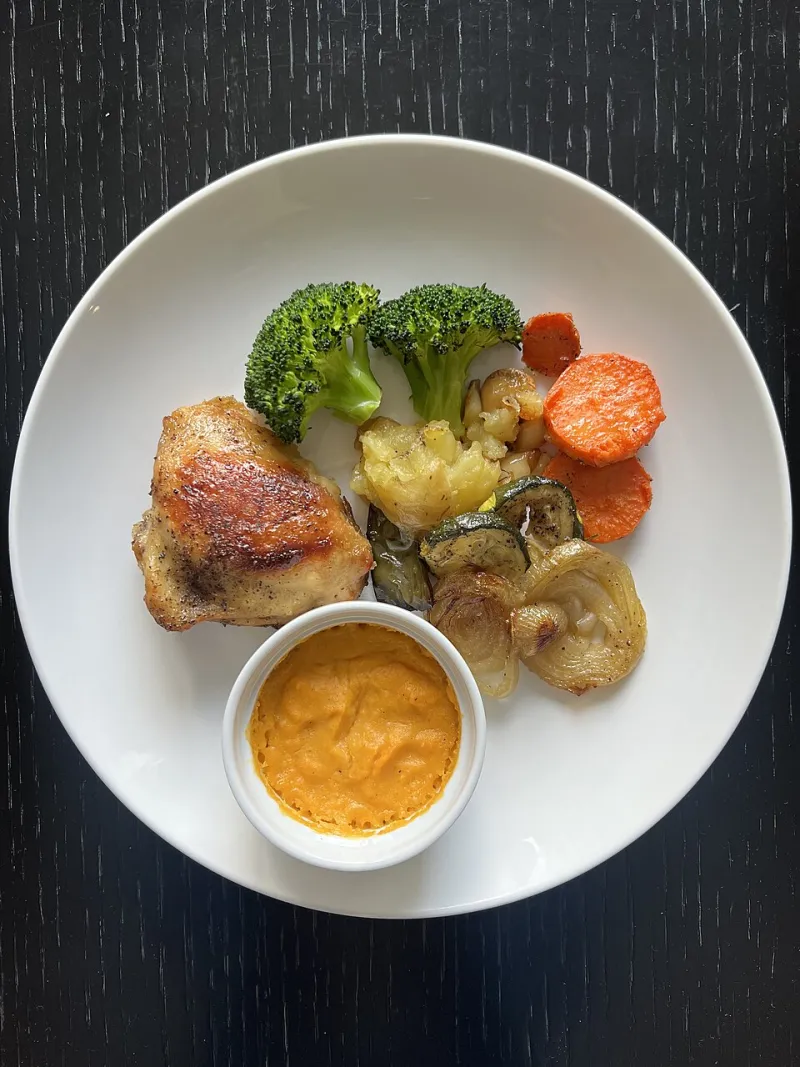
Photo: HaJunkiyada, CC BY-SA 4.0, via Wikimedia Commons
There's a moment, menu in hand, when most tables do the same thing. Everyone picks a main, someone suggests a side, and one lonely dish of greens gets ordered to make the table feel virtuous. It arrives last, sits in the middle, and is largely ignored.
We'd like to propose a different order of play. Sides first. Not as an act of penance, but because the vegetable cooking is often the most interesting thing happening in a kitchen right now, and because a table built around well-made side plates is one of the most enjoyable ways to eat.
Here are six from our seasonal menu that earn their place at the centre.
1. Charred cavolo nero, lemon and anchovy
Dark, blistered, faintly bitter and thoroughly unapologetic. Cavolo nero takes well to a hot pan and a hard squeeze of lemon, and the anchovy does the quiet work of making the whole thing taste deeper than it has any right to.
Order it alongside something rich and let it cut through. Or, honestly, eat a plate of it with bread and call it lunch. Pair it with a crisp dry white or a sharp, dry cider.
2. Honey-roast parsnips, hazelnut and sage
November's most underrated vegetable. Roasted hard until the edges caramelise, finished with honey and a scatter of toasted hazelnuts, this is the sort of side that makes people stop mid-sentence. The sage keeps it from tipping into sweetness.
It's a natural partner for roast chicken, game or a plate of well-hung beef. Pair it with a soft, nutty amber ale or a glass of something oaked and white.
3. Buttered pearl barley with roast squash
Grain-based sides deserve far more attention than they get. Pearl barley has bite, a lovely chewy texture and a nuttiness that holds up against butter and roasted squash without turning to stodge.
This is the one to order if you want a side that behaves a bit like a main. It's substantial enough on its own with a green salad, and it soaks up gravy beautifully if there's a roast in front of you. Pair it with a light red or a textured skin-contact white.
4. Pickled red cabbage with juniper
Sharp, jewel-bright and bracing. Pickles are the punctuation marks of a good table: they stop rich food from becoming monotonous and they wake up anything that's been cooked slowly.
A spoonful of this alongside a pie, a braise or a plate of cured meat does more than any sauce could. Pair it with a dry sherry or a bright, chilled red.
5. Buttermilk crushed potatoes
Not a reinvention, just a proper job. New potatoes crushed rather than mashed, dressed with buttermilk and plenty of salt and pepper, so you get soft edges and a bit of skin and none of the glueyness that ruins lesser potato dishes.
The kind of side that disappears before the mains arrive. Order two. Pair it with absolutely anything, though a crisp pilsner is a fine start.
6. Jerusalem artichoke gratin
Knobbly, faintly smoky and briefly in season, Jerusalem artichokes make a gratin with a flavour you can't quite place. Cream, a little garlic, a slow bake and a crust that's worth fighting over.
This is the richest plate on the list and the one most likely to start an argument about who gets the corner. Pair it with something taut and mineral, or a gentle red served cool.
Building a meal around them
Sides-first eating isn't complicated. It just needs a different shape.
For a lighter lunch: two sides and a piece of bread. The barley or the cavolo nero will do the heavy lifting, and you'll leave feeling like a person who made a sensible decision.
For a shared dinner: four sides, one main between two people. There's something pleasantly continental about a table crowded with small dishes and everyone reaching across, and it means nobody gets stuck with a plate of food they didn't really want.
For a table of four: order all six. We're not going to talk you out of it. Add one main to keep up appearances and get on with the business of passing things around.
What to drink across the table
Mixed side plates are notoriously tricky to match, because you've got sweetness from the honey, bitterness from the greens, cream from the gratin and acid from the pickles. The way through is usually the middle ground: a crisp, unoaked white, a light red with decent acidity, or a good dry cider. Fizz works surprisingly well too, because bubbles handle richness better than almost anything else.
If you're going alcohol-free, ask for something bitter and herbal rather than something sweet. Sweet drinks struggle against pickles.
The last word on sides
The vegetable plate has come a long way from the sad dish of peas that used to arrive at British tables somewhere near the end. Good kitchens put serious effort into this corner of the menu, often because it's where the season shows up most clearly.
So next time you're sitting down with a menu, do the unconventional thing. Pick the sides before you pick the main. You'll end up with a better-balanced table, more things to taste, and a very good chance that the dish you remember afterwards is the one that arrived in a small bowl.