Ask for the Glass: The Quiet Pleasure of Lunch by the Window
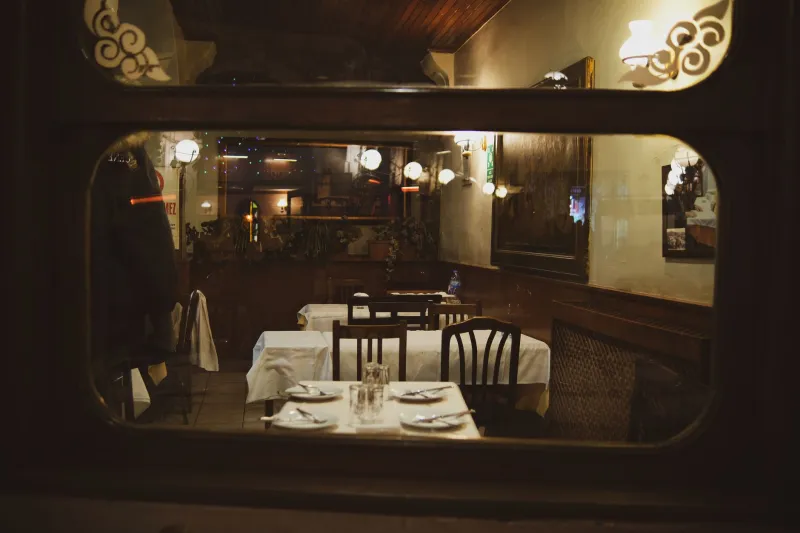
At half past twelve on a grey Tuesday, the best table in the house is not the one in the middle. It is the one pressed up against the glass: close enough to feel the draught when someone comes in, far enough from the door to avoid the full blast. From there, lunch comes with a view of the pavement, a bus queuing at the lights, a dog refusing to move, and a delivery rider doing that little hop onto the kerb. It is not glamorous. It is better than glamorous. It is ordinary life, framed.
We tend to treat the window seat as the consolation prize. It is the table you get when the good ones are gone, or the one you accept because you have a pram, a bag, or a preference for not being overheard. But as the November light turns early and the street starts to glow at four in the afternoon, the glass stops being a compromise. It becomes part of the meal.
The table that keeps you in the room and out of it
A good all-day brasserie should feel like a room with a pulse. The window table gives you both sides of that: the warmth inside, the weather outside. You can be perfectly cosy with a bowl of something slow and a glass of something cold while the sky does its November thing behind a row of umbrellas. You are not sealed off from the neighbourhood. You are sitting in the front row of it.
That matters more than it sounds. Lunch in the middle of a room can be lovely, but it is a closed loop: table, menu, conversation, bill. Lunch by the window has a little more air in it. The pace changes. You notice the couple sharing a bag of chips on the bench opposite. You watch the florist turn the sign from open to back in five. You see the same person walk past twice and wonder, briefly, what they have forgotten. None of this is your business. All of it is pleasant company.
November makes the view more valuable
In summer, the window seat is about sunlight and pretending you are on holiday. In November, it is about contrast. The street gets darker, the shop windows get brighter, and the brasserie becomes a lit-up box of good intentions: soup, toast, coffee, a proper pudding. The first time you see the street lamps on at teatime, you feel the season click into place.
There is also the small matter of the early dusk. By three o'clock, the light has already started to make its excuses. That can feel like a reason to stay in, but it is also a reason to go out and sit somewhere warm while the day packs up around you. A window table lets you do both at once. You are indoors, but you are not hiding. You are watching the neighbourhood settle into the evening, one bus at a time.
At Mombay Brasserie, the front tables have a natural job. They catch the comings and goings, the school run, the late lunchers, the people who have just missed the rain and the people who have clearly not. They are not the quietest seats, and they are not the most private. But they are the most sociable, in the gentlest sense. You do not have to talk to anyone. You just have to be there.
People-watching without the performance
The trick with window seats is not to treat the street like television. It is more like a window box: something small and local that you tend without making a fuss. You are not judging the passers-by. You are just noticing them. The man who always carries his umbrella like a walking stick. The two friends who meet outside the estate agent and take ten minutes to decide where to go. The toddler in the rain cover who has clearly won the argument.
This is the quiet pleasure of a neighbourhood brasserie. It is not a performance of localism. It is just the ordinary theatre of a place where people live. The window seat makes that theatre visible. It reminds you that the restaurant is not a bunker. It is part of the street, and the street is part of it.
How to order for a window table
There is an art to eating by the glass. Keep it simple. Order something you can eat slowly without having to concentrate too hard: a plate of something roasted, a bowl of pasta, a sandwich that demands both hands. Get a coffee you can linger over. If the pudding list is calling, answer it. The window seat rewards the unhurried lunch, not the rushed one.
It also helps to go at the right time. Midweek, just after one, is ideal. The first rush has gone, the room has settled, and the street is still busy enough to be interesting. On a Saturday, the window is a different film entirely: buggies, bags, brunch, a queue at the bakery. Both are good. They just ask for different moods.
The small case for asking
The window table is not the best seat for a proposal. It is not the one you book for a birthday with a surprise at the end. But it might be the best seat for the kind of lunch that asks nothing of you except that you show up and pay attention. It is a seat for solo diners, for friends who like to talk and then stop talking, for anyone who wants to feel connected to the day without being swept up in it.
So next time you are asked where you would like to sit, do not do the polite thing and wave vaguely at the middle of the room. Ask for the glass. In November, especially, it is the best company in the house.